
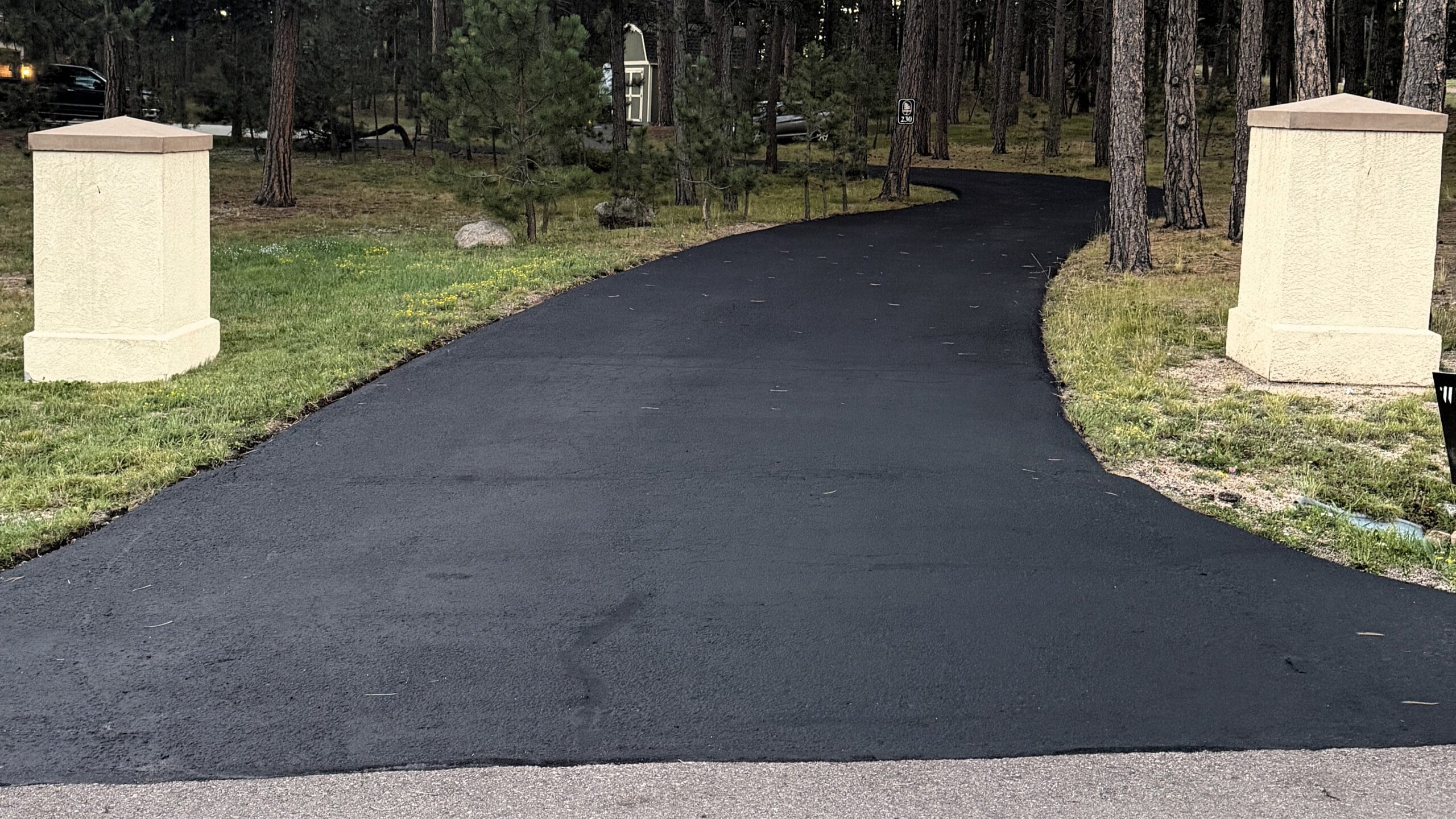
How Often Should You Sealcoat an Asphalt Driveway?
Most asphalt driveways should be sealed about every 3 to 4 years. That is a good general guideline, but the right timing depends on the age and condition of the asphalt, sun exposure, drainage, weather, and how much daily use the driveway receives.
Rather than sealing on a strict schedule, it is usually better to look at the condition of the pavement. Sealcoating works best as preventive maintenance before cracks, potholes, and surface damage become severe.When Is It Time to Sealcoat Again?
A driveway that is still dark, smooth, and well protected may not need another coat yet. If the surface is starting to look gray, dry, or worn, it may be time to consider sealcoating.
Colorado weather can be hard on asphalt. Strong sun, temperature changes, snow, ice, and deicing products can all contribute to surface wear. A driveway with heavy vehicle traffic or poor drainage may also age faster than one that is shaded and lightly used.
That is why two driveways installed at the same time may not need sealcoating on the same schedule.
Signs You May Need Driveway Sealcoating
Your driveway may be ready for sealcoating if you notice:
- Faded or gray asphalt
- Small cracks beginning to form
- Water soaking into the surface instead of beading up
- Dry, brittle, or worn-looking pavement
- Stains from oil, salt, or vehicle fluids
- A driveway that looks dull or neglected
These signs do not automatically mean sealcoating is the only service your driveway needs. The condition of the pavement should be evaluated first.
Sealcoating Is Maintenance, Not Repair
Sealcoating helps protect the surface of asphalt and gives it a darker, more uniform appearance. It does not repair damaged pavement underneath.
If your driveway already has cracks, potholes, crumbling areas, or other signs of deterioration, those problems should be addressed before sealcoating. Simply covering damaged asphalt with sealer will not fix the underlying issue.
When repairs are needed, we recommend completing the appropriate asphalt driveway repair first. Sealcoating can then be used as the final protective maintenance step once the pavement is properly prepared.
This is also why it is better not to wait until a driveway is severely damaged before thinking about maintenance. Sealcoating provides the most value when the asphalt is still in good enough condition to protect.
Can You Sealcoat a Driveway Too Soon?
Yes. More sealcoating is not always better. A driveway does not need a fresh coat every year simply because another summer has arrived.
Applying sealcoat more often than the pavement needs it can create unnecessary buildup on the surface. The photo below shows what that buildup can look like when a driveway is sealed again too soon.
Example of excess sealcoat buildup from resealing too soon
Sealcoating is meant to be a thin protective treatment. If the previous coating is still in good condition and the asphalt underneath remains protected, waiting is usually the better choice.
The goal is to seal the driveway when the pavement needs protection, not just because a certain amount of time has passed.
What Affects Sealcoat Frequency?
Several factors can affect how quickly a driveway needs another sealcoat application.
- Age and condition — Older asphalt may show signs of oxidation and wear sooner.
- Sun exposure — Direct UV exposure can cause asphalt to fade and dry out over time.
- Drainage — Standing water and poor drainage can contribute to pavement deterioration.
- Vehicle traffic — Heavier daily use can cause the surface to wear faster.
- Previous maintenance — The quality and condition of earlier sealcoat applications can affect timing.
Because every driveway is different, these factors matter just as much as the number of years since the last application.
The Bottom Line
For most asphalt driveways, every 3 to 4 years is a good starting point for sealcoating.
If the asphalt is still dark and well protected, it may be too soon. If it is beginning to look faded, dry, or worn, it may be time for another application. And if you are seeing significant cracks, potholes, or other pavement damage, repairs may need to come first.
Seeing signs that your driveway may be ready? Request a free driveway sealcoating estimate and we’ll help you determine whether sealcoating, repair, or a combination of both makes sense for your asphalt.